
What image comes to mind when I say de-escalation? Do you imagine a trench-coated figure with a megaphone grimly coaxing someone off of a high ledge?
Having done, and taught about a form of that work, I can tell you that the cinematic image of de-escalation has occasional grains of truth. More often though, de-escalation looks nothing like that. More commonly, de-escalation happens in smaller and more mundane ways, across our daily lives. Maybe a friend is growing more anxious about medical debt, a child is distraught about a bad day at school, or tempers are beginning to smolder around the holiday dinner table.
If you’re wondering why an Odd Fellow would want to explore the topic of de-escalation, consider that wherever there are humans in community with one another, humans who become strained or burdened by the layered aspects of their lives, there is always a need for de-escalation.
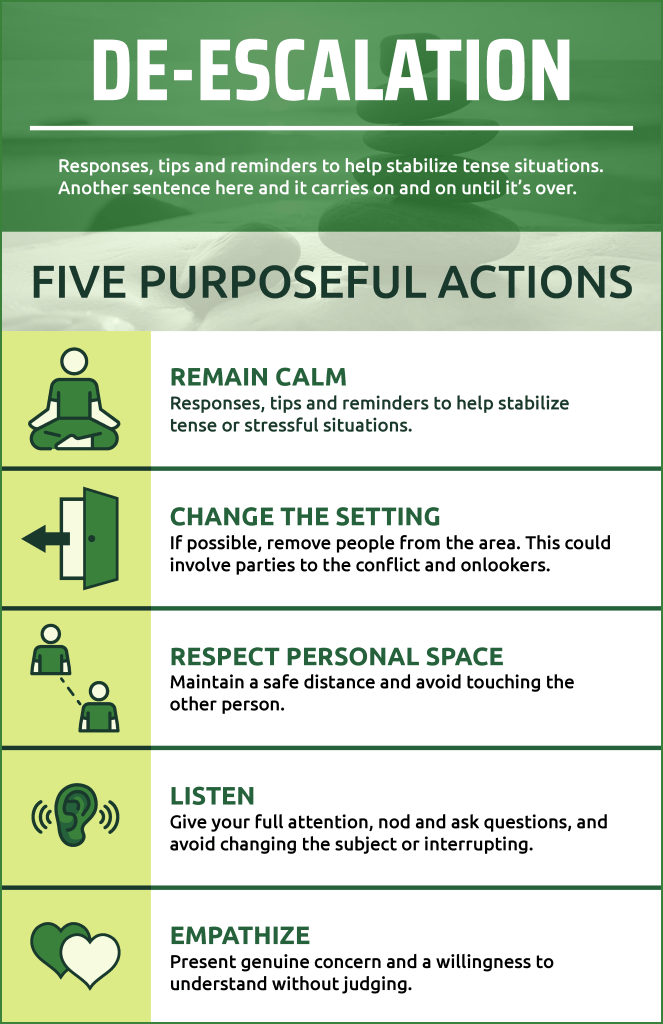
De-escalation is the slowing, stopping, or reversing of movement toward a state of emergency. So what are some key parts of working toward that goal?
- Know that behavior is always communication.
- People don’t just communicate with the words they select and speak. They also share information with their tone, cadence, and body language.
- Being observant of what is being communicated (across words, tone, cadence, and body language) gives us useful information about a person’s distress, and related needs.
- Realize that your own behavior is always a part of the equation.
- Our own behavior has influence over the behavior of others (for good, or for ill). Being self-aware, and intentional about what our behavior communicates, can help us to communicate supportively, to convey sincerity, and to soothe anxiety.
- Understand that behind every person’s surface need, is an underlying need to feel safe, heard, or empowered.
- People give us clues about their underlying needs by how they vent, what they try to withhold, and how they present themselves overall, in moments, and over time.
- Letting the underlying need inform how we address the surface need, can make us more successful de-escalators.
- Remember that the more you build trust and nurture relationships, the more open people will be about their specific needs. This trust and openness can make it easier to de-escalate during an hour of need.
- And lastly, please keep the perspective that we are helping others to regain, or to remain in control.This mindset reminds us that our goal is to be a helper, and not an adversary, because dialing down distress, can serve us all.
…
Want to more about the Odd Fellows? Ask Me I May Know!
Visit our Facebook page: Heart In Hand

 Heart in Hand